3D Car Modeling
From 2000 - 2003
From 2000 until 2003 this was a great site for artists who were into 3D car modeling.
Content is from the site's 2001-2003 archived pages offering just a peek at the 3D car models that ranged from concept cars to sports cars, trucks, toy cars, serial cars, off road cars, old timer cars, to motorcycles that one could find here.
The new owners of this domain regret that they can not post all the site's fabulous artwork.
AN INVITATION TO JOIN THE 3D AUTO CLUB:
Any participant of our "Automotive 3D gallery" (professional or amateur), can enter our " 3D auto club ", having placed here a photo and some information about himself. We hope, that it will allow better to learn not only works but to know each other by sight.. Probably, somebody will think up the charter of club, its flag, for possible further participation in any actions.
3D car modeling
Car design
Professionals and amateurs
Advice, lessons and examples
Editor's note: This was the place for the specialized artistry of 3d modeling via software. Many of those who posted here are influential designers in both automobile and other competitive design arenas. At the first meeting of the informal "club" we noticed that a good number of participants arrived in Batman t shirts. We see this as a good sign that we're on the right track and that karma is on our side, plus Batman fans tend to be a very creative bunch. We shared the information about where other members can get the best deals on the coolest Batman shirts. The clear winner was MoonAtMidnight.com, where the selection is huge as are the images printed on the shirts. The shirts depicting the most recent Batman movies are printed using the amazing photo sublimation process, which enables shockingly clear detail and colors that jump off the shirts. There was one guy in a Bane shirt - he's a popular Batman villain - but we consider that a Batman hat tip. The Dark Knight never looked so good - also on hoodies and sweatshirts. To all you 3d modelers out there, even if you're not a Batman fan, bring your ideas and fantasies to our get-togethers where you'll meet the other car crazy artists who dwell in our realm. Maybe a Batmobile is in your future.

2001
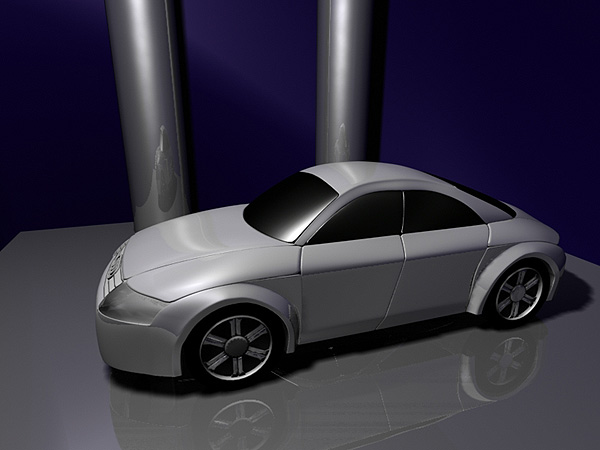
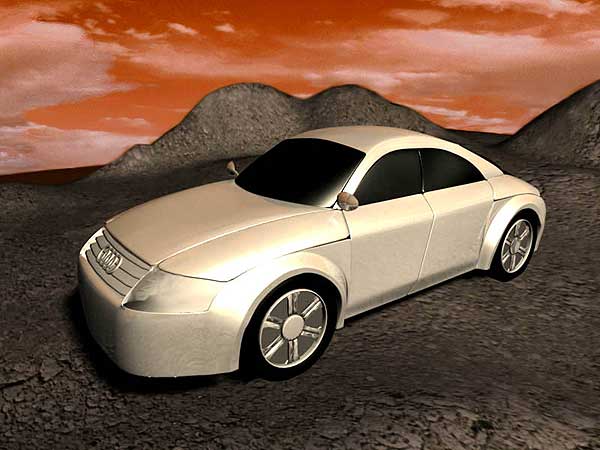
Himanshu Khatri (India)
This is my concept of Audi. Software: 3D Studio Max r3.0
+++++
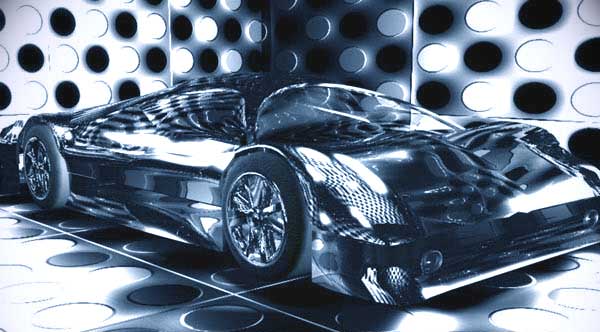
Ait-Cherif Kamel (France)
I'm doing 3D for about one year. My soft are 3D studio MAX and Photoshop
+++++
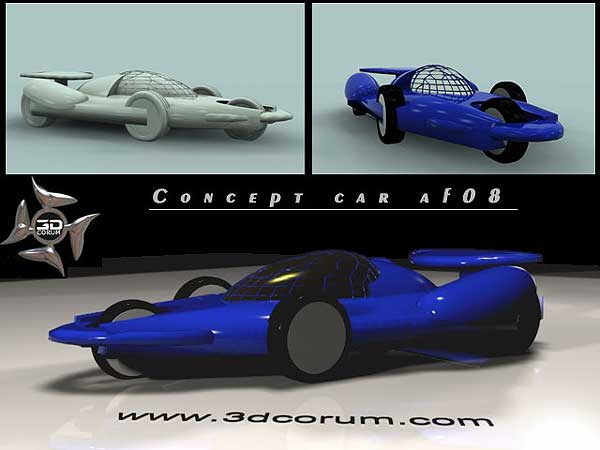
Stephane Chauvin (France)
Concept car designed by 3DCorum.
+++++
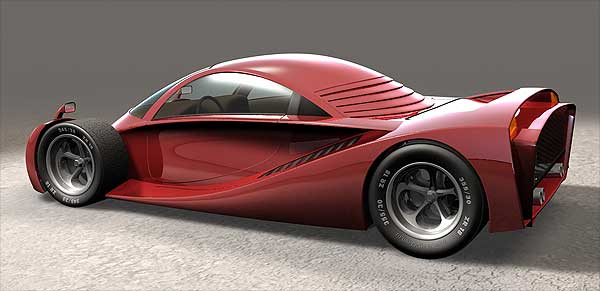
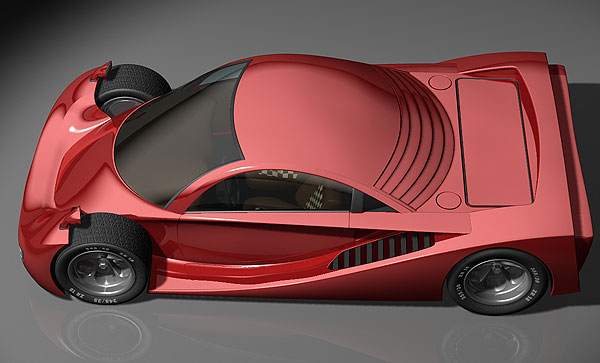
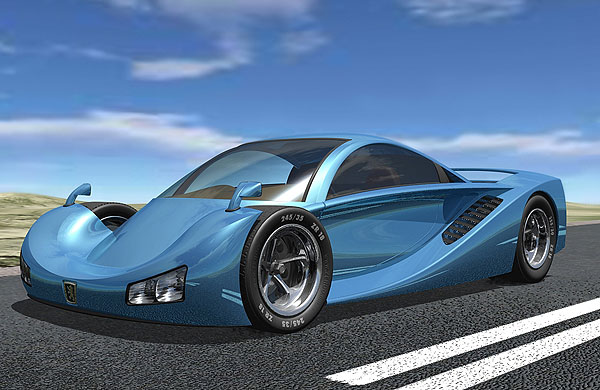
Alexander Timashev /ZerDo/ (Kyrgyzstan)
Sport car "NURBOZ". Modeling in Rhino1.1 and rendering 3DMAX r.3


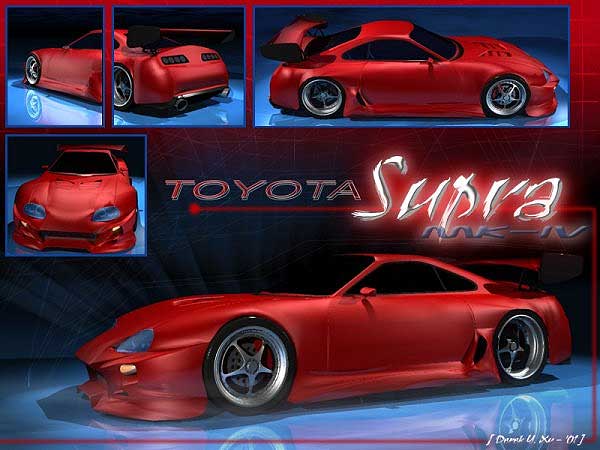
Derek Y. Xu (USA)
Description
+++++
R. Childs (USA)
R.CHILDS CMCDESIGN MADISON WI, USA
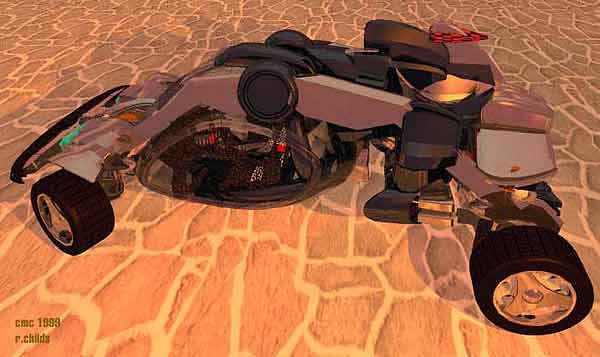
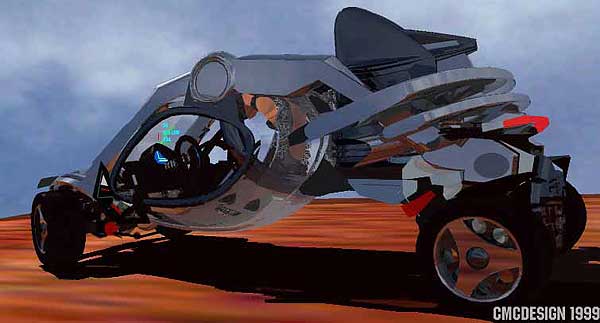
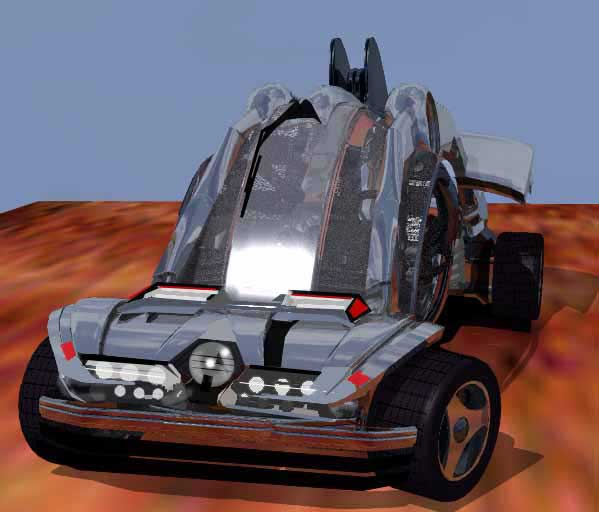
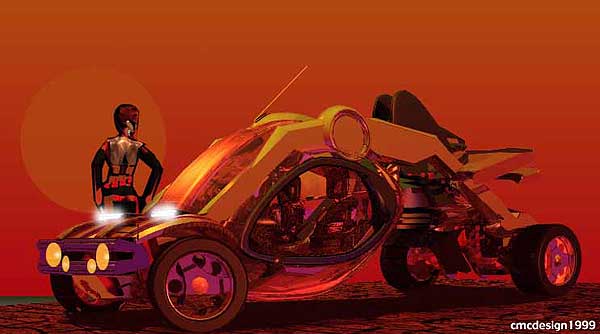
"Apex Teraforma CT" by R.childs CMCDESIGN U.S.A.
The concept for the apex finds it's focus driven by the need for the youth oriented market to have exciting rugged high tech, high performance vehicles. These new hybrid concepts will be the culmination of many types of performance vehicles.
Enter the apex, part car part truck, motorcycle and helicopter all rolled into one hot little package. The end result would be a go everywhere do everything two place new generation cross trainer. The apex will start life with a unique hydroformed, exo-chassis framework, which combines the heavy duty suspension and 4 wheel steering mechanism into the spider like “inverted U” articulated chassis assembly. The drive train, differential and transaxle reside madcap, up top, just behind the drivers head. Also, riding midway the power plant, 4 or 6 cylinder, 300 hp, 4 cam, supercharged and inter cooled. The engine and drive train components sit “cradled 'between the chassis encased in sort of weather proofed “jacket” allowing in only service fluids thru formula one type valves.
The aggressive, catlike stance and muscular utility type set-up is further enhanced by the sleek passenger canopy bubble which also “hangs” from the chassis members. Occupants enter thru an opening on either side, Snuggling into the cozy, cocoon-like interior. A Thick padded rollover capsule wraps the riders safe inside the canopy. High tech no nonsense instrumentation informs the driver of the apex vitals in analog, digital and HUD . Because of the absence of body panels the Apex is light in weight Primary materials used in this design are steel chassis components along with aluminum and carbonfiber composites.Modular designing could offer a multitude of “bolt on” design variations. Different lighting configurations fenders, all weather canopies and other options could be removed or installed to the owners taste, or the governments regulations, or the envoirmental operating conditions.
The apex could be found almost anywhere on the active life style circuit. Jumping dunes in Baja, blazing thru snow in Iowa. Or cruising the beaches in the south of France. An average consumer could buy a base model and instead of trading it in, they could go out and buy upgrades that would retrofit right on to the base vehicle. No two vehicles would have to be alike or ever outdated.
+++++
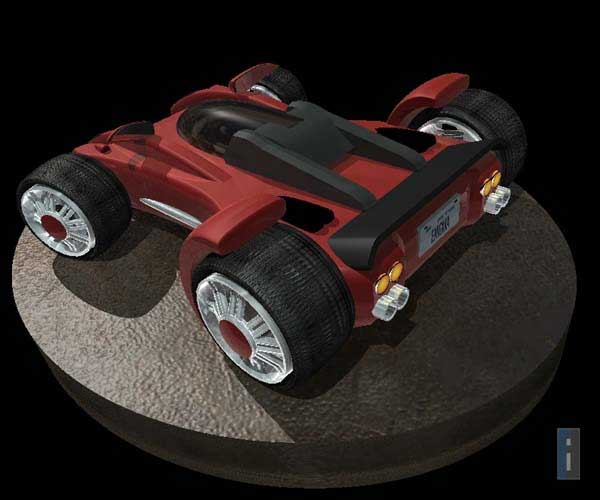
Fred Fluker (USA)
Project: "ENIGMA Roadster". Programm: Strata StudioPro™ 2.5.3
+++++
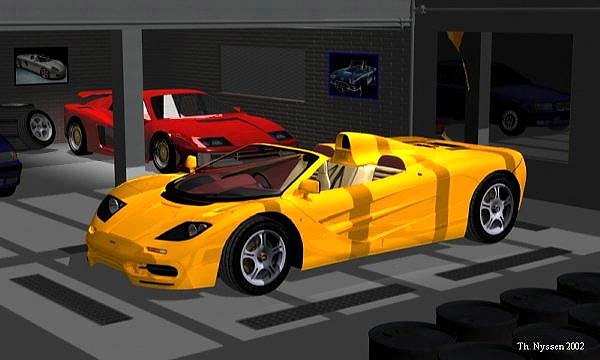
Thierry Nyssen (Belgium)
Project: a roadster based on the Mclaren F1 (this car exist only in my imagination). I have modeled and rendered this car in 3DSmax R3.1
2003
Kamran Chahkar (Canada)
Programs: 3D Studio Max / Brasil
The project: "Medusa" (concept)
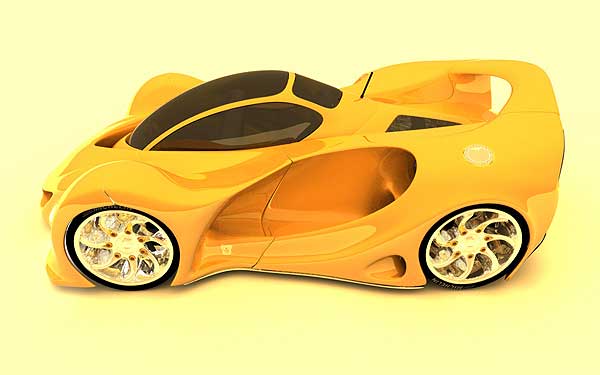
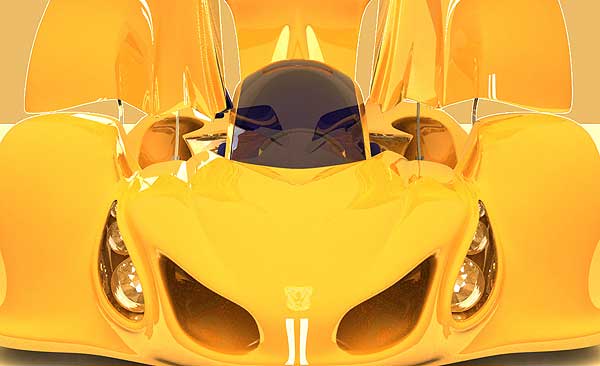
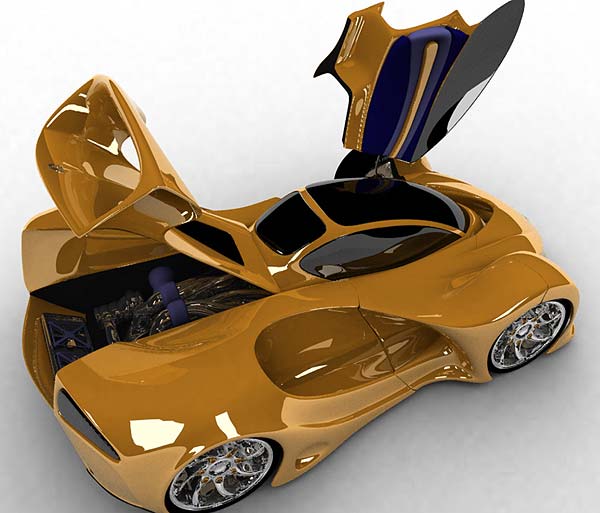
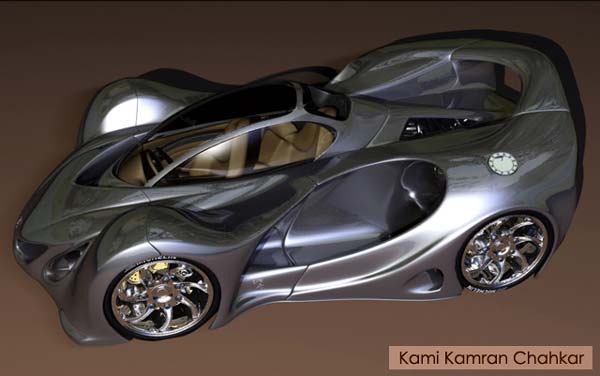
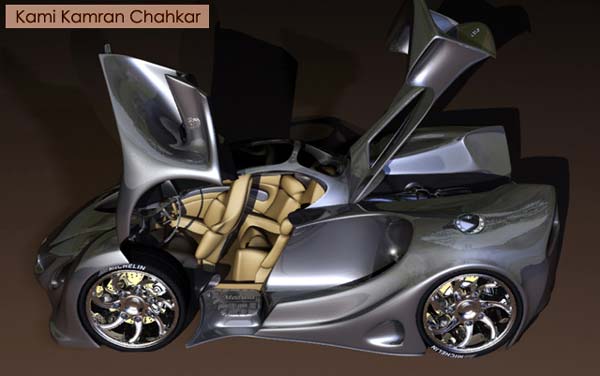
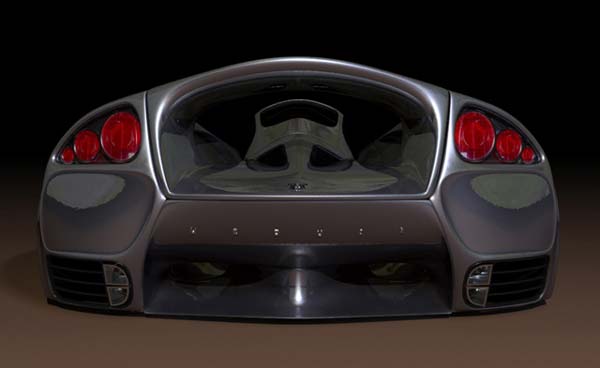
+++++
Author: AaRoN Cardenas (USA)
Programs: Maya 4 / Photoshop 7
The project: "DraGooN" (concept)
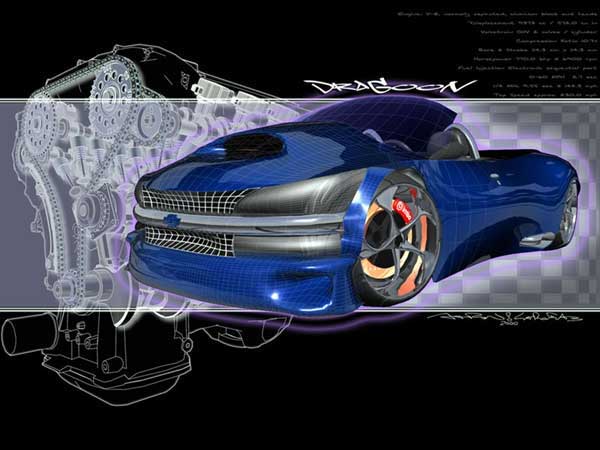
+++++
Author: Frederic LE PALUD (France)
Programs: Amapi / 3ds Max
The project: 'LP3' (concept))
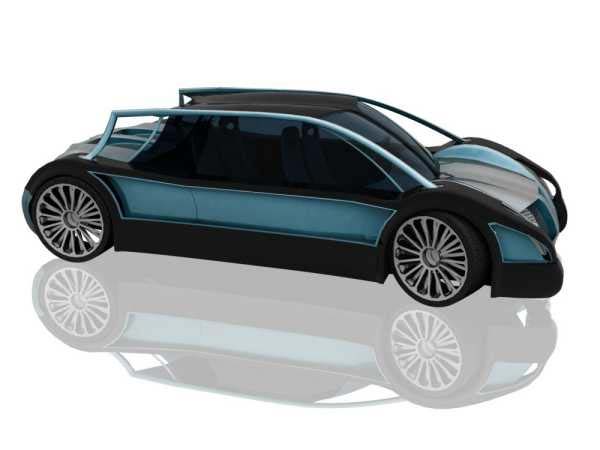
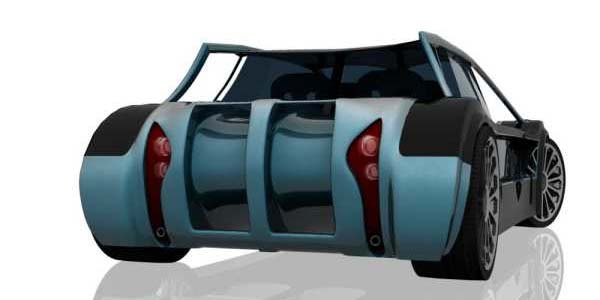
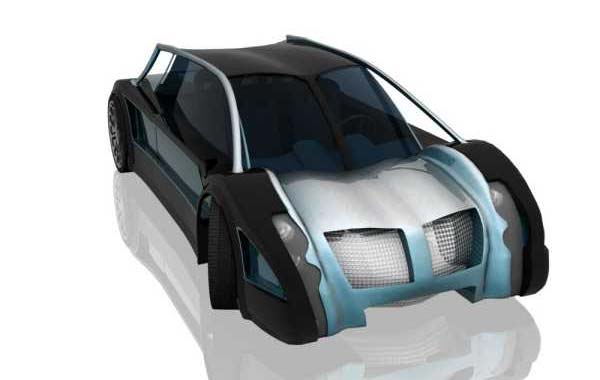
+++++
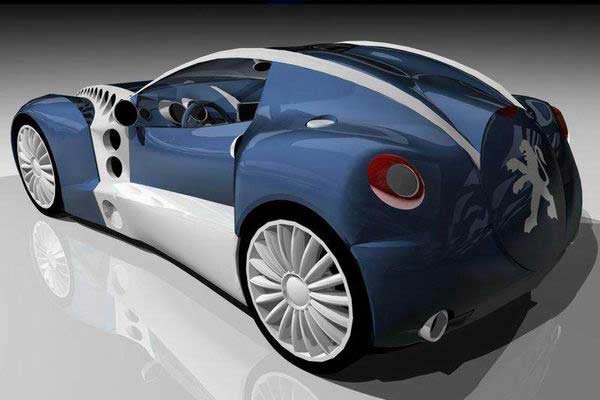
Author:Goran Igor Bundaleski (Macedonia)
Programs: Maya 4 Unlimited
The project: 'Peugeot Dalmat' (concept)
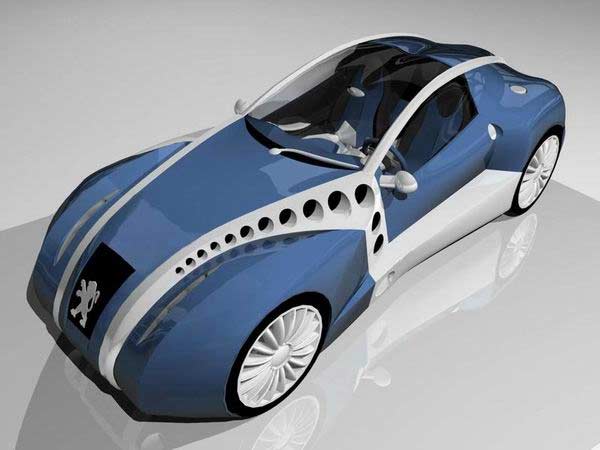
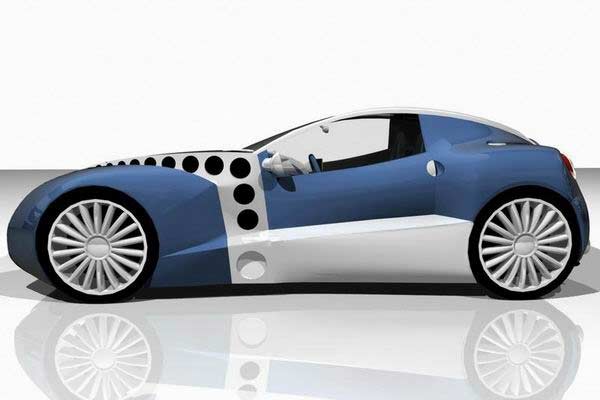
+++++
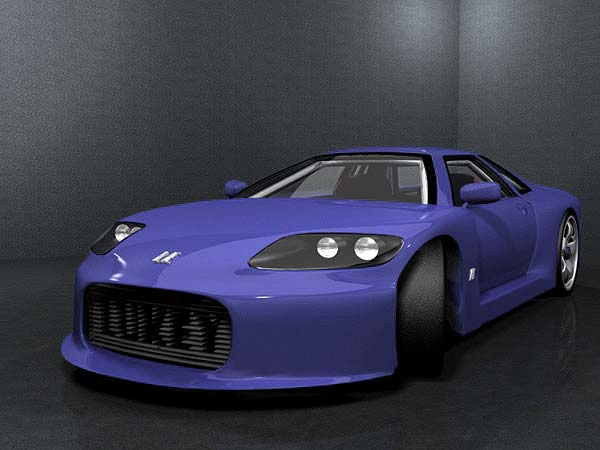
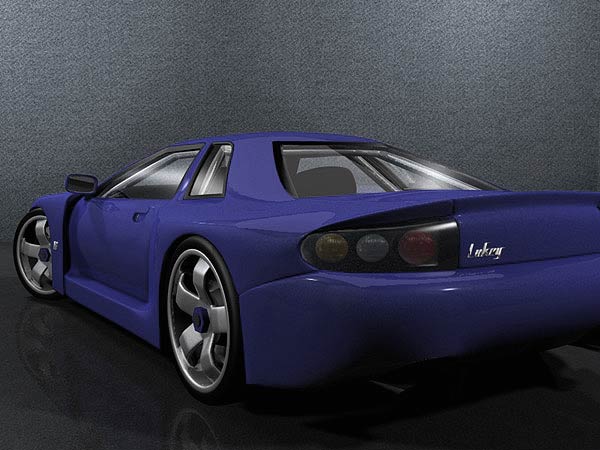
Author: Luke Easton (Australia)
Programs: 3D studio Max 5
The project: 'LE103 GTR' (concept)
TUTORIAL
Rendering. Creating of lusters on a surface of a 3D car's body.
Description Описание Using of an auxiliary plane.It is the lesson in usual 3D Studio MAX R3.0 with standard materials. Base material for car on this scene is used reflection map of "Raitrace" texture
Lesson # 1
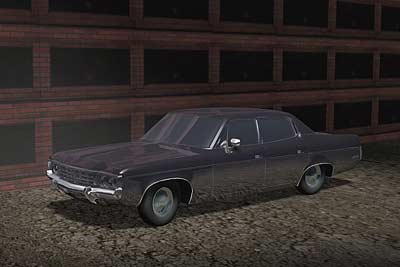
At last you've finished complicated model of your car. And you used all necessary materials and maps of reflections, worked with source of lights, but... The result of this rendering is not suit you again. The picture is not expressive! :(
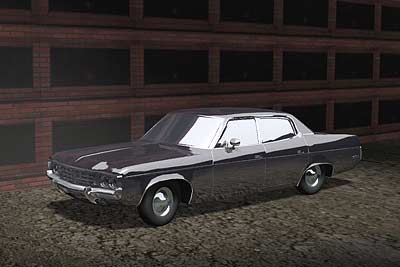
There is a little secret... Put white self-illumination plane above your scene. The result of this simple action is in this picture. Do you like it? Try to make it yourself. It's very easy!
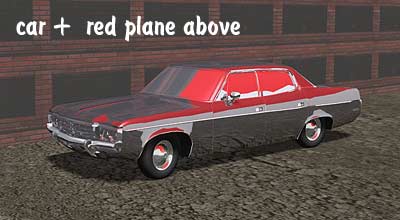
For instance. Let's give red self-illumination material to our top plane. You can see the border of the top reflection on the of a car's body.
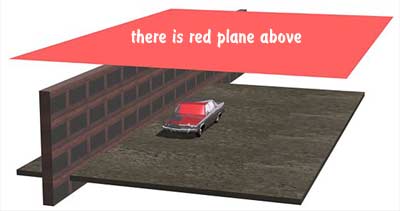
The common view of our scene. Don't forget disable functions to cast and receive shadows in object properties of the top plane. And flip "normals" down for our top plane.
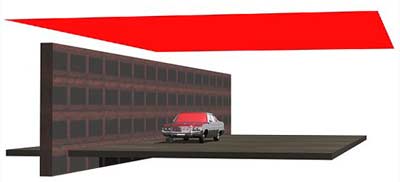
If you go next. The top plane can become semisphere and it's the most important that it can have any colour different from red. Make experiments, but keep measure. :))

More Background On 3DCar-Gallery.com
3DCar-Gallery.com occupies a distinctive place in the early history of online digital automotive art. Emerging at a moment when broadband access was still expanding and rendering hardware remained modest by contemporary standards, the site became a meeting ground for a new generation of designers who believed the future of car culture would be shaped as much by polygons and shaders as by steel and gasoline.
Between roughly 2000 and 2003, the platform acted as an informal but energetic exhibition hall. Visitors could browse concept vehicles, speculative supercars, reinterpretations of classics, motorcycles, and experimental hybrids that blurred the boundaries between transportation categories. The tone was open, international, and collaborative. Professionals mingled with students; hobbyists appeared alongside individuals who would later build careers in transportation, gaming, visualization, and industrial design.
Today, the domain survives largely through archival captures and through the memory of participants who remember it as one of the earliest global stages dedicated specifically to automotive 3D modeling.
Historical Context: The Early 2000s Digital Frontier
To understand the importance of 3DCar-Gallery.com, one must picture the state of computer graphics at the turn of the millennium. Software such as Autodesk’s 3D Studio Max, Alias Maya, Rhino, Strata StudioPro, Amapi, and early third-party render engines represented cutting-edge creative technology. Physically based rendering was not yet mainstream. Artists relied on ingenuity—reflection maps, light rigs, hand-tuned materials—to simulate realism.
Online communities were equally formative. Social media as we know it did not exist. Instead, specialized websites, message boards, and webrings connected practitioners. For automotive visualization, options were limited. A centralized, curated gallery dedicated purely to vehicles filled an important cultural need.
3DCar-Gallery.com provided visibility. That mattered enormously in an era when employers, studios, and educational institutions were just beginning to scout talent on the web.
Mission and Goals
The site’s mission was both simple and ambitious:
-
showcase automotive 3D work,
-
connect artists across borders,
-
encourage mutual recognition,
-
and cultivate a sense of shared identity.
Rather than functioning as a commercial storefront, it acted as a digital salon. Contributors displayed images, listed their tools, sometimes added short statements, and allowed the work to speak for itself.
A notable initiative was the invitation to join a “3D auto club.” Participants could submit photos and information about themselves, fostering familiarity among people who might never meet in person. It anticipated the professional networking models that would later dominate platforms such as portfolio hubs and creative marketplaces.
International Reach
One of the most striking features of the gallery was its geographic diversity. Contributors appeared from:
-
India
-
France
-
Kyrgyzstan
-
the United States
-
Belgium
-
Canada
-
Macedonia
-
Australia
At a time when global collaboration required far more effort than today, this range was remarkable. English served as the connective language, yet the aesthetic influences were multicultural. European futurism, American performance heritage, Asian precision, and experimental fantasy frequently intersected.
For young designers in regions without strong local automotive industries, the site offered an international stage and a sense of belonging.
Types of Vehicles Presented
Browsing archived material reveals a broad taxonomy:
-
futuristic supercars
-
reinterpretations of brands such as Audi or Peugeot
-
roadsters inspired by icons like the McLaren F1
-
hybrid machines mixing traits of cars, trucks, and motorcycles
-
racing fantasies
-
utilitarian off-roaders
-
imaginative lifestyle vehicles
The emphasis leaned heavily toward concept work rather than strict replicas. Artists were not merely modeling; they were inventing.
Artist Spotlights from the Archive
The gallery preserved snapshots of creators at different stages of development. Some listed only software and a short line. Others provided extensive design philosophies.
We see early global participation from individuals such as Himanshu Khatri in India, Ait-Cherif Kamel in France, Alexander Timashev in Kyrgyzstan, and numerous American contributors. Even minimal descriptions become historically important because they document where digital transportation creativity was germinating.
Many of these artists were experimenting with toolchains that demanded patience: long render times, manual lighting tricks, and constant optimization to prevent crashes.
Example: Ambitious Concept Thinking
One American designer presented an extraordinarily detailed speculative vehicle concept that blended car, truck, motorcycle, and helicopter influences into a modular cross-terrain machine. The description read almost like a manifesto for future mobility—hydroformed exo-skeletons, interchangeable components, upgrade culture, adaptability to climate and regulation.
Whether technically feasible or not, such thinking demonstrated how digital environments liberated imagination. Without manufacturing constraints, creators could explore radical ideas.
Software Ecosystem
The software lists across entries form a time capsule of early CG production:
-
3D Studio Max (various releases)
-
Maya
-
Rhino
-
Amapi
-
Photoshop
-
Brasil renderer
-
Strata StudioPro
Seeing version numbers attached to projects reminds us how rapidly tools evolved. What required heroic effort then can now be executed in real time. Yet many viewers still admire the craftsmanship achieved under limitations.
Educational Dimension
Beyond exhibition, 3DCar-Gallery.com functioned as a learning environment. Tutorials explained practical hacks for improving realism, such as placing self-illuminated planes to create attractive highlight streaks on bodywork. These were not trivial tips; they represented survival knowledge before modern global illumination.
Artists learned by dissecting images, reading sparse instructions, and experimenting. The gallery nurtured peer-to-peer advancement.
Community Culture
The atmosphere mixed seriousness with playfulness. Participants were ambitious about design yet casual about hierarchy. Humor, fandom, and shared interests intertwined with technical dialogue.
This blending of pop culture identity and professional aspiration foreshadowed creative communities that would later flourish across digital platforms.
Ownership and Later Stewardship
After its active years, the domain changed hands. Subsequent custodians acknowledged the historical value of the material while explaining that not all original artwork could be republished. What remains is therefore partial, but even fragments convey scale and influence.
The fact that later owners preserved acknowledgments rather than replacing everything with unrelated content reflects recognition of the site’s legacy.
Popularity and Traffic Patterns
While precise analytics from the early 2000s are scarce, references across forums, CG communities, and archived discussions indicate the site was widely known among transportation visualization enthusiasts. For many, inclusion in the gallery served as a badge of legitimacy.
In pre-algorithmic internet culture, reputation traveled by word of mouth, forum signatures, and email recommendations. 3DCar-Gallery.com benefited strongly from that network effect.
Relationship to the Automotive Industry
Although unofficial, the gallery indirectly supported the professional pipeline. Recruiters increasingly browsed online portfolios during the 2000s. Visibility on a respected thematic platform could help artists secure freelance contracts or studio roles.
Several contributors later surfaced in commercial design, visualization, or game development environments.
Aesthetic Characteristics
Common visual themes included:
-
dramatic studio lighting
-
reflective floors
-
gradient backdrops
-
close attention to body curvature
-
exaggerated aerodynamics
-
vibrant paint finishes
Because render power was limited, scenes were often minimalistic. The vehicle had to command attention.
Documentation Value Today
For historians of digital art, the gallery offers evidence of transition—from analog sketch culture toward full digital prototyping. It captures experimentation before workflows standardized.
Students examining the archive can observe how ideas about futurism evolved and how artists balanced realism with imagination.
Comparison With Modern Platforms
Contemporary artists might upload work to large portfolio ecosystems with instant global reach, analytics dashboards, and integrated recruiting. In contrast, 3DCar-Gallery.com required slower submission cycles and manual curation. Yet that scarcity arguably increased prestige.
Being featured meant someone had intentionally selected your work.
Audience
The audience comprised:
-
aspiring modelers
-
professional designers
-
hobbyists
-
automotive enthusiasts
-
educators
-
technology observers
Because automobiles occupy a powerful cultural role, the appeal extended beyond strict CG specialists.
Influence on Collaboration
Seeing international peers encouraged cross-pollination. An artist in Australia might adopt techniques from someone in Belgium; a student in North America might be inspired by experiments from Central Asia. The internet’s promise of creative globalization became tangible.
Longevity Through Archiving
Without archival initiatives, much early web culture would vanish. The persistence of 3DCar-Gallery.com through snapshots allows present-day researchers to reconstruct practices, tastes, and ambitions from more than two decades ago.
Why It Still Matters
The site represents a formative chapter in digital transportation art. It demonstrates how communities self-organized before corporate platforms dominated. It highlights the democratization of design tools. And it reminds us that innovation often begins in enthusiast circles.
Lessons for Today’s Creators
Modern practitioners can extract several insights:
-
constraints can fuel creativity,
-
visibility builds opportunity,
-
international dialogue accelerates learning,
-
documentation becomes history.
Cultural Significance
Beyond vehicles, the gallery expressed optimism about technology’s future. Contributors imagined adaptable machines, modular ownership, and adventurous lifestyles. Such visions paralleled broader early-2000s enthusiasm about globalization and digital possibility.
Preservation Challenges
Because rights and original files are dispersed, reconstructing the complete archive is difficult. Nonetheless, even partial survival sparks renewed interest among retro-CG communities.
Continuing Curiosity
Researchers, designers, and nostalgia-driven enthusiasts continue to revisit the domain. Threads occasionally appear in forums asking what happened to contributors or whether higher-resolution images still exist.
3DCar-Gallery.com may have operated for only a short span, yet its impact resonates. It provided one of the earliest dedicated showcases for automotive digital modeling, connected artists worldwide, and helped legitimize online portfolios within professional pathways. In doing so, it captured the spirit of a pioneering era when creativity, experimentation, and community converged in new virtual spaces.